


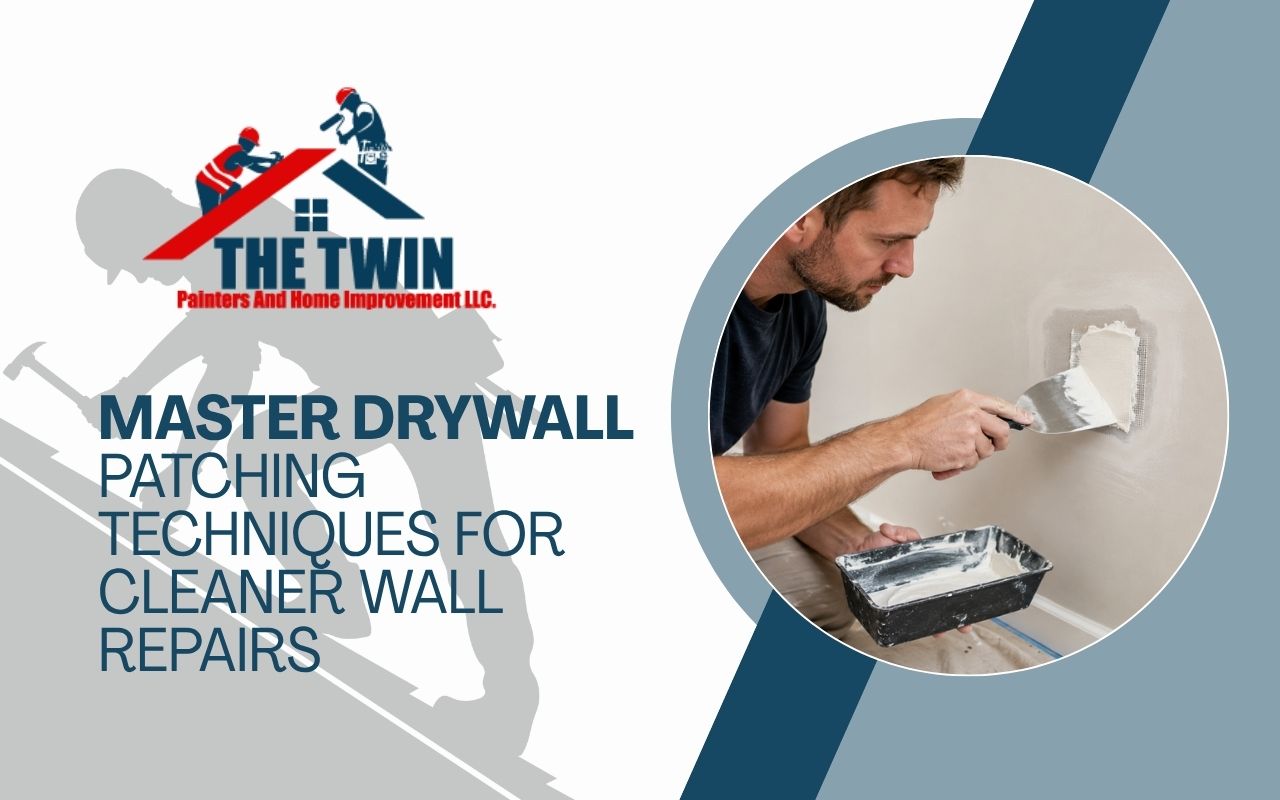
Master Drywall Patching Techniques for Cleaner Wall Repairs
Drywall patching techniques can make small wall damage feel less stressful. A dent, scratch, or hole can change how a room looks, yet the right repair steps can bring back a clean surface without making the work feel hard.
At The Twin Painters And Home Improvement LLC, we know walls carry everyday signs of life. Therefore, we focus on simple, clear repairs that help your home feel cared for, fresh, and ready for paint.
Small Drywall Damage Needs Careful Repair Steps
Small wall marks may seem easy to ignore. However, they can stand out after light hits the wall or after new paint goes on. Drywall patching techniques help fill damage in thin layers, so the surface stays even.
Before starting, look closely at the size, depth, and place of the damage. Nail holes, cracks, and dents each need a different approach. For deeper warning signs, our guide on common drywall damage signs can help you understand what to check.
Essential Tools That Make Wall Repairs Much Easier
Good tools help each repair feel smoother from the start. In addition, they help you avoid rough edges, weak patches, and extra sanding. Drywall patching techniques work best when the right items are ready before the first layer goes on.
Putty knife for spreading compound evenly
Sanding block for smoothing dry repair areas
Dust mask to help protect you while sanding
Damp sponge for cleaning dust and loose paint
Primer and matching paint for the final finish
Simple Ways To Prepare Damaged Areas Correctly
Clean walls help patching material stick better. First, wipe away dust, grease, and loose paint with a damp sponge. Then let the area dry fully, because wet surfaces can weaken the repair.
Next, trim loose edges with care and smooth the area with sandpaper. This step makes the patch easier to blend. When customers contact The Twin Painters And Home Improvement LLC, we explain how preparation often decides how clean the final result looks.
Choosing Better Repair Methods For Holes And Cracks
Different damage needs different repair choices. For example, small nail holes may only need spackle, while larger openings may need mesh, tape, or a new drywall piece. As a result, the repair lasts longer and looks cleaner.
Use spackle for small holes and shallow dents.
Utilize mesh patches for medium holes with weak edges.
Apply drywall tape for cracks that may reopen.
Employ backing support for larger wall openings.
Drywall patching techniques also work better when each layer is thin. Thick layers can shrink, crack, or take too long to dry. For help with home repair needs, visit our handyman services in Pearland.
Sanding And Painting Steps For A Smooth Finish
After the compound dries, sanding helps the patch match the wall level. Start with medium grit to remove raised spots. Then use fine grit for a softer finish. Always wipe away dust before primer or paint.
Primer helps the repaired spot hold paint evenly. After that, use matching paint and light strokes from the patch into the nearby wall. For a cleaner finish, our painting services in Pearland can help the surface blend naturally.
Wall Texture Matching For A Cleaner Final Look
Wall texture matching is often the step that makes a repair disappear. Even when a patch is flat, the wall can still look uneven if the texture does not match. Therefore, texture should be tested before the final paint.
Check the existing wall texture under bright light.
Practice the texture on scrap drywall first.
Apply light layers instead of one heavy coat.
Let texture dry before adding primer and paint.
At The Twin Painters And Home Improvement LLC, we take time to match the surface as closely as possible. This matters because drywall patching techniques should fix the damage without leaving a clear repair mark behind.
Frequently Asked Questions
Can small drywall holes be patched without help?
Yes, small holes can often be patched with spackle, a putty knife, sanding, primer, and paint. However, larger or repeated damage may need a more careful repair plan.
How long should drywall compound dry before sanding?
Most compounds need several hours to dry, but drying time depends on the product and layer thickness. Always check the label and sand only when the patch feels fully dry.
Why does a patched wall still show after paint?
A patch may show if it was not sanded, primed, or textured correctly. In many cases, wall texture matching and primer help the repair blend better.
When should drywall tape be used for repairs?
Drywall tape is helpful for cracks, seams, and wider damaged areas. It adds support and helps reduce the chance of the crack showing again.
Do you handle drywall repairs near Friendswood too?
Yes, our team can help with home repair needs in nearby areas. You can learn more through our handyman services in Friendswood.
Keep Your Walls Looking Fresh With Professional Care
Drywall patching techniques can help bring back a smooth, clean wall after everyday damage. Still, careful prep, thin layers, proper sanding, and paint blending all matter if you want a repair that looks natural.
At The Twin Painters And Home Improvement LLC, we guide homeowners with honest repair options and clear next steps. To plan your wall repair or painting project, get in touch with us through our contact page.